

Red light therapy has attracted considerable interest in skincare, wellness, sports recovery and regenerative medicine. Also known as photobiomodulation, it uses specific wavelengths of red or near-infrared light with the aim of influencing biological processes within cells.
The potential benefits of red light therapy range from supporting skin rejuvenation and certain forms of hair loss to applications in pain management and tissue recovery. However, the scientific evidence is stronger for some uses than others, and red light therapy should not be regarded as a treatment for every condition it is advertised to address.
For people considering professional red light therapy in Dubai, understanding how the treatment works, what the research currently supports and its limitations can help set realistic expectations.
This guide examines the potential benefits, common uses, science, safety and practical considerations surrounding red light therapy.
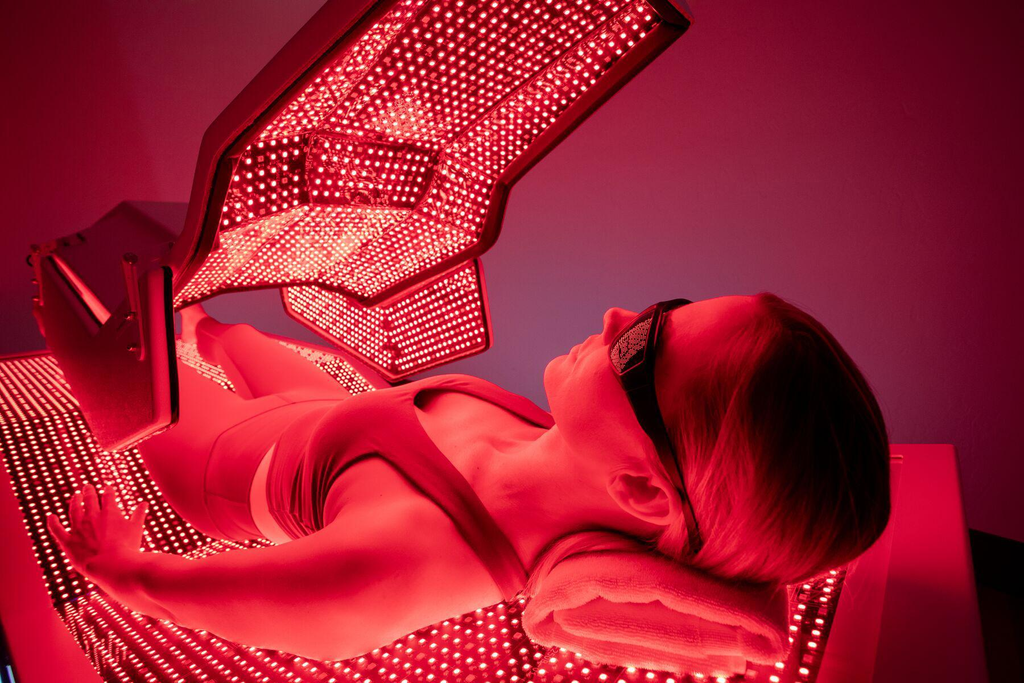
What Is Red Light Therapy?
Red light therapy, commonly abbreviated as RLT, is a form of photobiomodulation (PBM). It involves exposing tissue to controlled levels of red or near-infrared light.
You may also encounter terms such as:
- Photobiomodulation
- Low-level light therapy
- Low-level laser therapy
- LED light therapy
Although these terms are sometimes used interchangeably, devices can differ substantially in their light source, wavelength, intensity and treatment protocol.
Unlike ultraviolet radiation from sunlight and tanning devices, red and near-infrared light does not contain UV radiation.
Rather than intentionally heating or damaging tissue, photobiomodulation aims to produce biological responses through exposure to specific wavelengths of light.
How Does Red Light Therapy Work?
Scientists are still investigating the precise mechanisms behind photobiomodulation.
One of the leading explanations involves the mitochondria, structures within cells that play a central role in producing adenosine triphosphate, or ATP, which cells use as a source of energy.
Red and near-infrared wavelengths can interact with light-sensitive molecules within cells. One proposed target is cytochrome c oxidase, an enzyme involved in mitochondrial energy production.
These interactions may influence processes involving:
- Cellular energy metabolism
- Nitric oxide signalling
- Blood flow
- Oxidative stress
- Inflammatory responses
- Tissue repair
It is tempting to simplify this process by saying that red light simply “increases cellular energy”, but photobiomodulation is more complex. The biological response depends on factors including wavelength, dose, treatment duration, tissue type and the device being used.
What Wavelengths Are Used in Red Light Therapy?
Photobiomodulation devices use different wavelengths depending on their intended purpose.
Commonly used ranges include:
- Visible red light: often around 630–670 nanometres
- Near-infrared light: commonly around 800–900 nanometres
Red light generally interacts more strongly with superficial tissues, while near-infrared wavelengths can penetrate more deeply.
However, there is no single wavelength that is universally “best” for every treatment.
Dose, irradiance, treatment time, distance from the device and frequency of use also influence how much light reaches the tissue.
For this reason, wavelength alone should not be used to judge whether one red light therapy device is better than another.
Potential Benefits of Red Light Therapy
Research into red light therapy continues to develop. Some applications have considerably more supporting evidence than others.
1. Skin Rejuvenation
Skin health is one of the most widely promoted uses of red light therapy.
Photobiomodulation has been studied for its potential effects on collagen-producing cells, circulation and inflammatory processes within the skin.
It may help improve aspects of skin appearance such as:
- Fine lines
- Skin texture
- Mild signs of photoageing
- Redness
- Skin elasticity
Changes tend to be gradual rather than immediate, and outcomes differ between individuals.
Red light therapy should also be distinguished from resurfacing treatments such as lasers or chemical peels. It does not work by deliberately removing or damaging layers of skin.
2. Hair Growth and Androgenetic Alopecia
Hair restoration is one of the better-studied applications of low-level light therapy.
Research suggests that certain devices may help increase hair density or thickness in some people with androgenetic alopecia, which includes male and female pattern hair loss.
Treatment typically requires repeated use over a prolonged period.
Red light therapy will not address every cause of hair loss. Hair thinning may result from nutritional deficiencies, hormonal disorders, medication, illness, autoimmune conditions and numerous other causes.
Anyone experiencing unexplained or significant hair loss should therefore have the underlying cause assessed rather than assuming that light therapy will resolve it.
3. Wound Healing and Tissue Repair
Photobiomodulation has also been investigated for wound healing.
Depending on the condition and treatment protocol, it may influence processes associated with:
- Tissue repair
- Inflammation
- Cell migration
- Microcirculation
Clinical applications are more specific than simply stating that red light therapy “heals wounds faster.”
Professional assessment is particularly important for chronic wounds, diabetic wounds, infected wounds or wounds that are not healing normally.
These conditions should not be self-treated with a consumer red light device instead of receiving appropriate medical care.
4. Pain and Musculoskeletal Conditions
Red and near-infrared photobiomodulation has been studied for several musculoskeletal conditions.
Research has investigated its use in conditions involving:
- Knee osteoarthritis
- Tendon disorders
- Muscle pain
- Some forms of joint pain
- Certain sports injuries
Some evidence is encouraging, but results vary according to the condition and treatment protocol.
Red light therapy should therefore generally be considered a potential supportive treatment rather than a replacement for diagnosis, physiotherapy, medication or other treatments recommended by a healthcare professional.
5. Exercise and Muscle Recovery
Photobiomodulation has also attracted interest within sports and exercise recovery.
Researchers have investigated whether applying red or near-infrared light before or after exercise can influence:
- Muscle soreness
- Muscle fatigue
- Recovery
- Exercise performance
- Inflammatory responses
Some studies report benefits, but results are not consistent across every protocol or outcome.
Differences in wavelength, dose, timing and treatment area make it difficult to assume that results from one device or study apply to every red light therapy system.
6. Acne and Inflammatory Skin Concerns
Light-based therapies are also used in dermatology for acne and inflammatory skin conditions.
Red light may influence inflammatory processes, while acne treatments sometimes combine red light with other wavelengths.
However, persistent or moderate-to-severe acne should be assessed by a dermatologist because effective treatment may require topical or oral medication.
Can Red Light Therapy Improve Sleep, Mood or Energy?
Claims that red light therapy improves sleep, mood, mental clarity or general energy have become increasingly common within the wellness industry.
These areas remain less established than applications such as androgenetic alopecia.
Research continues into how light exposure and photobiomodulation might affect neurological and circadian processes, but there is currently insufficient evidence to present red light therapy as an established treatment for depression, seasonal affective disorder or sleep disorders.
People experiencing persistent problems with sleep, mood or fatigue should seek appropriate medical assessment rather than relying on red light therapy alone.
For people researching other treatments marketed around cellular energy and wellness, you can also read about NAD IV Therapy in Dubai. NAD IV therapy is a separate treatment with a different mechanism and should not be confused with photobiomodulation.
Types of Red Light Therapy Devices
Red light therapy is available through a wide range of professional and consumer devices.
Full-Body Panels
Large LED panels expose a relatively broad area of the body to red and near-infrared light.
They are used in some clinics, wellness centres and home setups.
Professional Light Beds
Some facilities use full-body systems that resemble treatment beds or booths.
Their specifications and intended applications vary between manufacturers.
LED Face Masks
LED masks are widely marketed for home skincare.
Some are designed primarily for red light, while others combine several wavelengths.
Handheld Devices
Smaller devices can be used on specific treatment areas such as the face, scalp or joints.
Hair Growth Caps and Helmets
Certain red-light and low-level laser devices are designed specifically for androgenetic hair loss.
Some devices marketed for hair regrowth have received regulatory clearance for specific indications, but this does not mean that every red light therapy device has been clinically proven for hair restoration.
Red Light Therapy at Home vs Professional Treatment
At-home red light devices have become widely available, but they can differ considerably from professional equipment.
Important differences may include:
- Light intensity
- Wavelength
- Treatment area
- Dose delivered
- Distance from the light source
- Quality of manufacturing
- Safety features
- Evidence supporting the intended use
Professional treatment can also involve assessment by a qualified practitioner who can determine whether photobiomodulation is appropriate for the patient’s concern.
A more powerful device is not automatically better. Photobiomodulation has a dose-dependent response, and increasing treatment intensity or duration does not necessarily improve the result.
Is Red Light Therapy Safe?
Red light therapy is generally considered non-invasive and appears to have a favourable safety profile when appropriately used.
Unlike tanning beds, red light therapy does not rely on ultraviolet radiation.
Possible short-term effects may nevertheless include:
- Temporary redness
- Skin sensitivity
- Mild irritation
- Temporary discomfort
- Headache in some users
- Eye discomfort if appropriate precautions are not followed
Excessive or inappropriate exposure may also increase the likelihood of unwanted effects.
Long-term safety data for frequent use of all types of consumer devices remain more limited than short-term data.
Do You Need Eye Protection?
Eye-safety requirements depend on the device, wavelength, intensity and manufacturer’s instructions.
Some devices require protective eyewear, while others are designed to be used with the eyes closed or incorporate specific eye protection.
Do not assume that red or near-infrared light is automatically safe to stare into simply because it does not contain UV radiation.
Follow the device manufacturer’s eye-safety instructions or the recommendations of the practitioner providing treatment.
Who Should Be Careful With Red Light Therapy?
Red light therapy may not be appropriate for everyone.
Medical advice may be particularly important for people who:
- Take photosensitising medication
- Have a condition that increases sensitivity to light
- Have an active skin disorder in the proposed treatment area
- Are receiving treatment for a serious medical condition
- Have unexplained skin lesions
- Have recently undergone another skin procedure
- Are pregnant and considering treatment for a medical rather than cosmetic purpose
A clinician should also be consulted before using red light therapy to treat an undiagnosed medical condition.
How Often Should You Use Red Light Therapy?
There is no universal red light therapy schedule.
Treatment frequency depends on:
- The condition being treated
- Wavelength
- Device intensity
- Treatment area
- Exposure time
- Dose
- Professional treatment protocol
Some protocols involve several sessions per week, while others are used less frequently.
Claims that everyone should use red light therapy for a fixed number of minutes or a particular number of times each week should therefore be treated cautiously.
When using an at-home device, follow the instructions supplied for that specific product.
When receiving professional treatment, follow the schedule recommended for your individual treatment plan.
How Long Does It Take to See Results?
Red light therapy generally does not produce dramatic changes after a single session.
The time required to notice a difference depends on why it is being used.
For skin concerns, repeated sessions may be required before gradual changes become noticeable.
Hair growth treatment can require several months because of the natural hair-growth cycle.
Musculoskeletal outcomes may also vary depending on the condition and whether red light therapy forms part of a broader rehabilitation programme.
Not everyone responds to treatment in the same way.
What Does the Science Say About Red Light Therapy?
The scientific picture is more nuanced than much online marketing suggests.
Photobiomodulation is a legitimate area of clinical research, and evidence supports its use for a growing number of specific applications.
Research is particularly encouraging for certain areas such as:
- Androgenetic alopecia
- Some wound-related applications
- Selected pain conditions
- Certain dermatological uses
However, this does not mean that every claimed red light therapy benefit has been proven.
Research remains difficult to compare because studies use different:
- Wavelengths
- Devices
- Light intensities
- Treatment durations
- Doses
- Patient populations
- Outcome measures
A positive study using one particular treatment protocol therefore does not prove that every red light therapy device will produce the same result.
Claims involving major weight loss, curing chronic diseases, reversing ageing or treating serious psychiatric conditions should be viewed particularly cautiously.
How to Choose a Red Light Therapy Device
If you are considering an at-home device, avoid choosing solely on the basis of marketing claims or the number of LEDs.
Useful factors to consider include:
Intended Purpose
Choose a device designed and evaluated for the area you actually want to treat.
A facial skincare device may not deliver the same treatment parameters as a hair-growth cap or large body panel.
Wavelength
Check which red and/or near-infrared wavelengths the device produces.
Irradiance and Dose
Wavelength is only part of the equation.
The amount of light reaching the tissue and the total dose delivered also influence photobiomodulation.
Regulatory Status
Check whether the device has any relevant regulatory clearance for its advertised medical purpose.
Be cautious when marketers use phrases such as “FDA registered” as though they mean the treatment has been clinically proven. Registration, clearance and approval are not the same thing.
Safety Information
A reputable manufacturer should provide clear information on:
- Recommended treatment distance
- Session duration
- Contraindications
- Eye protection
- Cleaning
- Device maintenance
Evidence
Ideally, look for evidence relating to the actual device or treatment parameters rather than relying entirely on research involving different equipment.
Limitations of Red Light Therapy
Red light therapy has several important limitations.
Results can vary considerably between people, and benefits are generally gradual rather than immediate.
Other limitations include:
- Evidence is stronger for some conditions than others
- Treatment protocols are not standardised
- Consumer devices vary substantially in output
- Some advertised benefits remain poorly supported
- Repeated treatment may be necessary
- Maintenance sessions may be required for some applications
- It may complement rather than replace conventional treatment
These limitations do not mean that photobiomodulation is ineffective. Rather, they highlight the importance of matching the treatment to a specific condition and using evidence-based expectations.
Frequently Asked Questions About Red Light Therapy
Does red light therapy really work?
Red light therapy has evidence supporting some specific uses, but effectiveness depends on the condition, device and treatment protocol. Evidence is stronger for certain applications, including androgenetic hair loss, than for many broad wellness claims.
Is red light therapy the same as infrared therapy?
Not exactly. Red light is visible light, while near-infrared light sits just beyond the visible spectrum. Many photobiomodulation systems combine both.
Does red light therapy contain UV radiation?
No. Red and near-infrared photobiomodulation devices do not work by exposing the skin to ultraviolet radiation.
Can red light therapy help with hair loss?
Some red light and low-level laser devices have shown benefits for androgenetic alopecia. However, red light therapy does not treat every cause of hair loss.
How quickly does red light therapy work?
Results depend on the treatment goal. Changes in skin appearance may develop gradually, while hair-growth treatments can require several months of consistent use.
Can I use red light therapy every day?
Not every device or treatment protocol is designed for daily use. Follow the instructions for the specific device or the schedule recommended by your healthcare professional.
Is red light therapy painful?
Red light therapy itself is generally non-invasive and should not normally be painful when used correctly.
Conclusion
Red light therapy, or photobiomodulation, is a non-invasive light-based treatment with a growing body of scientific research behind several specific applications.
Potential red light therapy benefits include support for certain skin concerns, androgenetic hair loss, selected wound-healing applications and some musculoskeletal conditions. However, evidence varies substantially between uses, and many broader wellness claims remain insufficiently established.
Results also depend on more than simply exposing the body to red light. Wavelength, dose, intensity, treatment duration and the condition being treated all influence the outcome.
Anyone considering red light therapy for a medical concern should discuss whether it is appropriate with a qualified healthcare professional. For cosmetic or wellness purposes, choosing a reputable provider or well-documented device and following the recommended treatment protocol can help set realistic expectations.
This article provides general information only and is not a substitute for individual medical advice, diagnosis or treatment.
