

If weight loss were simply about willpower, most women would have solved it decades ago. We know what to eat. We know we should move our bodies. We understand calories, protein, and even hormones. Yet for many women, especially after forty, weight becomes stubborn, unpredictable, and deeply frustrating. This was certainly my experience. Once post menopause arrived, my excess 45 pounds would not budge.
That is not a character flaw. It is biology. More specifically, it is your subconscious mind doing precisely what it was designed to do: protect you.
For decades, women have been taught to override their bodies through discipline and control. Push harder. Eat less. Move more. Ignore hunger. Fight cravings. This approach may work temporarily, but over time it creates a biological backlash that makes lasting weight release harder, not easier. I have worked with countless women who have lived by the “eat less” philosophy for years, rooted in the old “calories in, calories out” mentality. It is time to move beyond that thinking, especially in midlife.
The missing piece is not another plan. It is understanding how the subconscious mind influences behavior, stress, and metabolism.
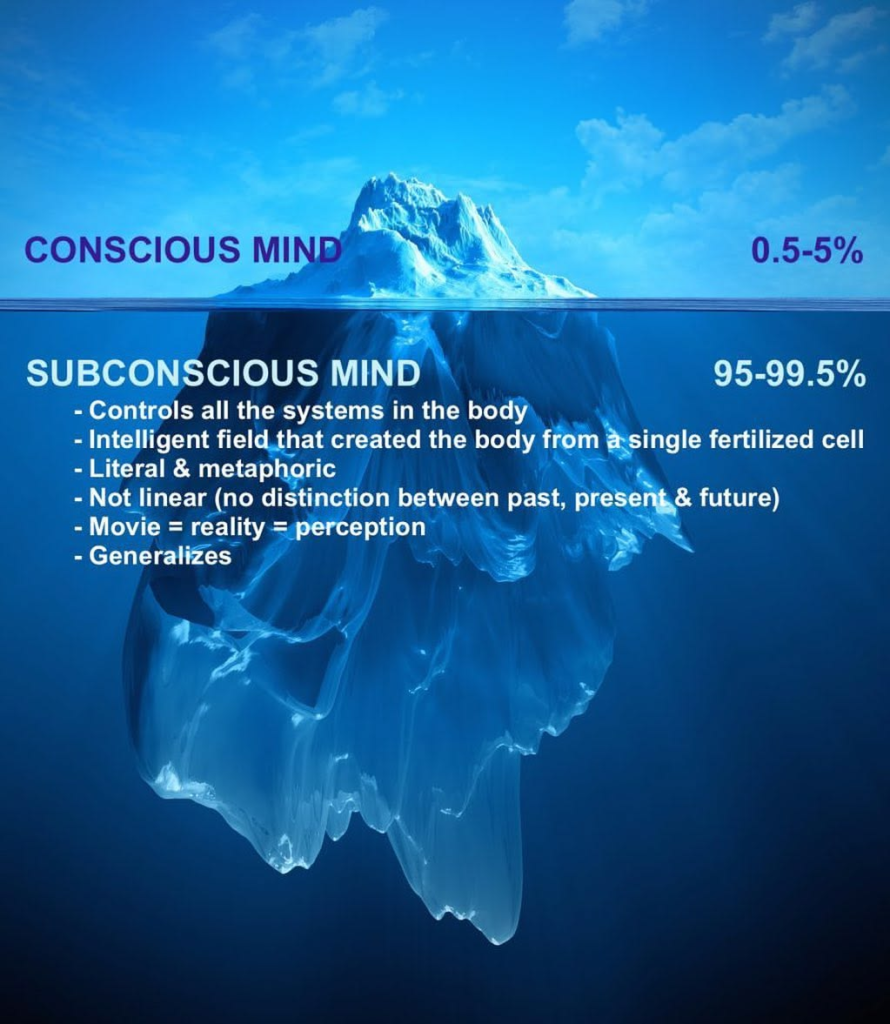
The Subconscious Runs the Show
The subconscious mind controls most of our daily behavior. It regulates breathing, heart rate, digestion, emotional responses, and habitual actions without conscious effort. Scientists estimate that up to ninety percent of our decisions are driven subconsciously.
This includes how we eat, when we stop eating, how we respond to stress, and how our bodies store or release weight.
Your subconscious does not care about fitting into jeans or following a food plan. Its priority is safety. When it perceives a threat, whether physical or emotional, it shifts the body into a protective state. In that state, the body conserves energy, increases appetite, disrupts sleep, and holds onto stored fuel. From an evolutionary perspective, this response helped humans survive periods of uncertainty and scarcity.
In modern life, the triggers are different. Chronic stress, repeated dieting, emotional pressure, and constant self-judgment are often interpreted by the subconscious as signals that stability is at risk.

Stress, Safety, and Weight Retention
Chronic stress is one of the most underestimated contributors to weight retention in women. When the body perceives stress, it releases cortisol. Cortisol raises blood sugar, increases insulin demand, disrupts sleep cycles, and signals the body to conserve energy.
Elevated cortisol also drives cravings for quick energy, most often sugar and refined carbohydrates. These cravings are not a lack of discipline. They are a physiological response to prolonged stress.
Over time, repeated stress signals train the body to remain in a near constant state of alert. When the nervous system rarely settles, the body becomes reluctant to release weight because it does not perceive conditions as supportive enough to do so.
This is especially relevant for women over forty. Hormonal changes amplify the stress response. Sleep becomes lighter. Recovery slows. Blood sugar becomes more volatile. The same strategies that once worked can suddenly stop working altogether.
Why Dieting Reinforces Resistance
Diet culture teaches rules, restrictions, and external control. The subconscious experiences these signals very differently from the conscious mind’s intentions. Restriction feels like scarcity. Food rules feel destabilizing. Shame and self-criticism feel threatening.
Each time a woman tells herself she has failed, her subconscious registers uncertainty. Each time she starts over, restricts again, or pushes harder, the body responds by holding on more tightly. This is not sabotage. It is self-preservation.
When weight release efforts are repeatedly paired with stress and deprivation, the subconscious learns to associate change with discomfort. Until that association shifts, the body will continue to resist release.
The Missing Link, Calming the Subconscious
Lasting weight release requires more than changing food. It requires changing the internal environment in which decisions are made.
When the nervous system feels calm, the body feels supported. When the body feels supported, hormones stabilize, sleep improves, digestion functions more efficiently, and cravings soften.
Calm is not passive. It is an active biological state that enables repair and balance. This is why relaxation, repetition, and positive suggestion are powerful tools. The subconscious learns through consistency, not force.
A Simple Place to Begin
One of the simplest ways to begin calming the subconscious is through repetition at bedtime, when the mind is naturally more receptive. As you get into bed each night, repeat the phrase, every day in every way, I am better and better.
Say it ten times. With each repetition, touch a finger to your thumb on both hands. On the fifth repetition, press your thumb firmly into your palm to remain present and alert. It is essential not to fall asleep before completing all ten repetitions. Many women also notice improved sleep as a result of this practice.
This gentle repetition signals safety. Over time, the subconscious begins to absorb a new message: that improvement is happening, that effort is safe, and that the body does not need to brace itself.
Why This Matters for Women Over Forty
Hormonal transitions make women more sensitive to stress signals. The body becomes less tolerant of extremes and more responsive to internal cues of support and balance.
This is why doing more often backfires in midlife—pushing harder increases stress, which in turn reinforces resistance. Doing more seems to be as much a part of midlife women as breathing. The old adage, “if you want something done, give it to a busy person, preferably a woman,” is true. But at what cost to our nervous systems?
When women calm their nervous systems, they often notice unexpected changes. Better sleep. Fewer cravings. Improved digestion. A steadiness that had been missing.
Weight release becomes a side effect of balance rather than a constant struggle.
Weight Release Is Not a Battle
The body does not need to be conquered. It needs to be understood.
When women stop fighting their bodies and start creating internal safety, everything changes. Food becomes information, not temptation. Movement becomes support, not punishment. The scale becomes feedback, not judgment.
When working to release weight and support hormonal balance, calming forms of movement are often most effective. High-intensity workouts can increase stress signals during this phase, so stepping away from them for four to six weeks may allow the body to respond more favorably. Practices such as yoga, Pilates, barre, tai chi, or walking communicate steadiness to the nervous system and support balance.
This is not about perfection. It is about partnership.
Final Thought
If weight loss has felt impossible despite your best efforts, it is very likely not because you are doing something wrong. It may be because your subconscious has been trying to protect you the only way it knows how.
When you calm the mind, the body follows.
Weight release is not about control. It is about trust. And trust begins within.
***
Debbie Harris is an Integrative Nutrition Health Coach, Certified Hypnotist, and Founder of the 30 to Life Solution, a proprietary program for women 45-60 to elevate their health, release excess weight, minimize menopause symptoms, and become Freedom Eaters. She has helped thousands of women ditch the dieting mentality and step into lasting freedom around food, and has been featured in Influencer Magazine, WOmenopause, Real Talk Real Stories Real Women, and more. Her new book, Dieting Sucks for Women Over 40: 30 to Life: The Ultimate Weight Loss and Hormone Balancing Solution (October 18, 2025), offers a plan rooted in compassion, science, and lived experience. Learn more at 30toLife.
