

Most comparisons between zipper pants and traditional pants focus on terms such as “accessibility” and “mobility.” While these benefits matter, they do not fully explain why adaptive pants can feel so different in everyday life.
The main difference is not simply how the pants look. It is how much physical effort may be required to put them on, take them off, adjust them, and remain comfortable throughout the day.
For someone with unrestricted mobility, traditional pants may present no difficulty at all. But when pain, stiffness, swelling, fatigue, injury, recovery from surgery, or age-related changes begin to affect movement, seemingly simple dressing tasks can become considerably more demanding.
That is where zipper pants may offer a practical alternative.
How Zipper Pants Make Dressing Easier
Traditional pants usually require a sequence of movements that most people rarely think about. You may need to bend forward, balance on one leg, lift each foot through a narrow opening, pull the fabric over the hips, and adjust the waistband.
When mobility becomes restricted, however, these movements can require considerably more effort.
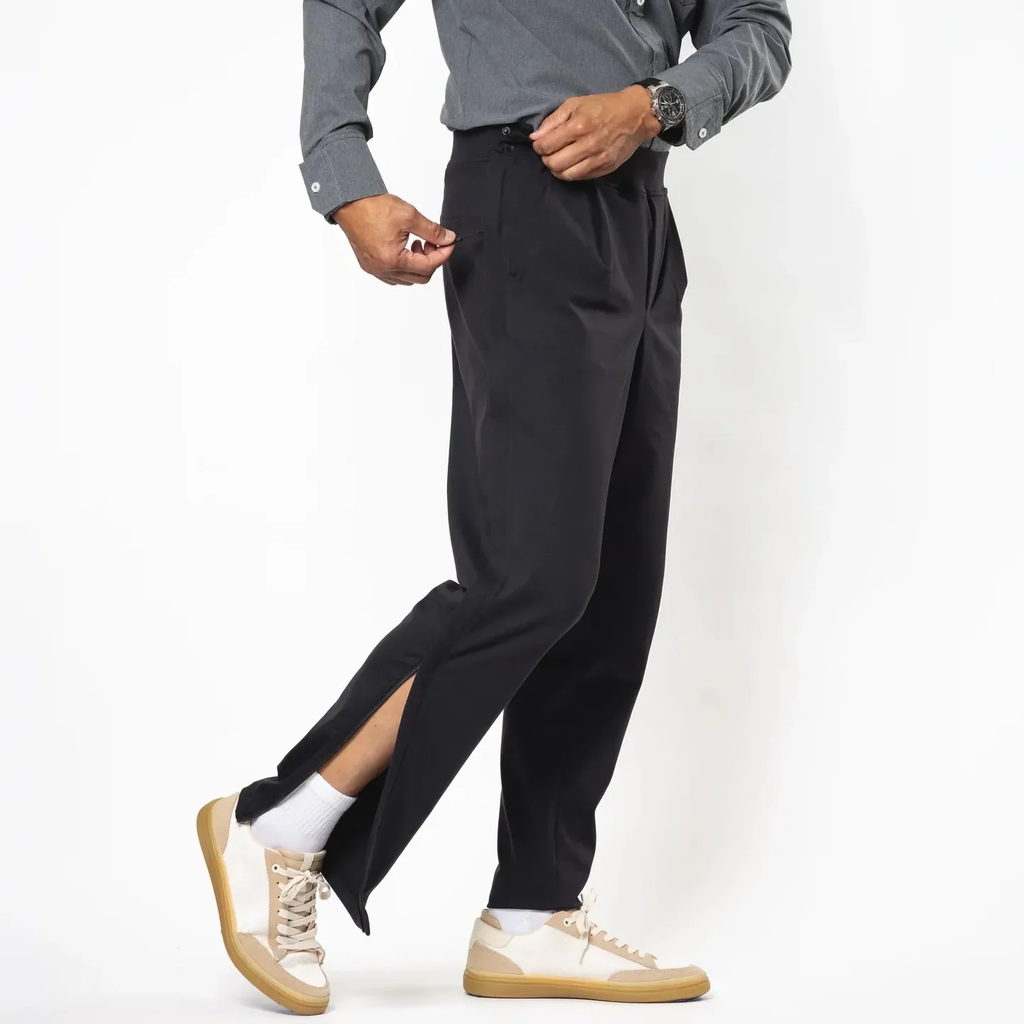
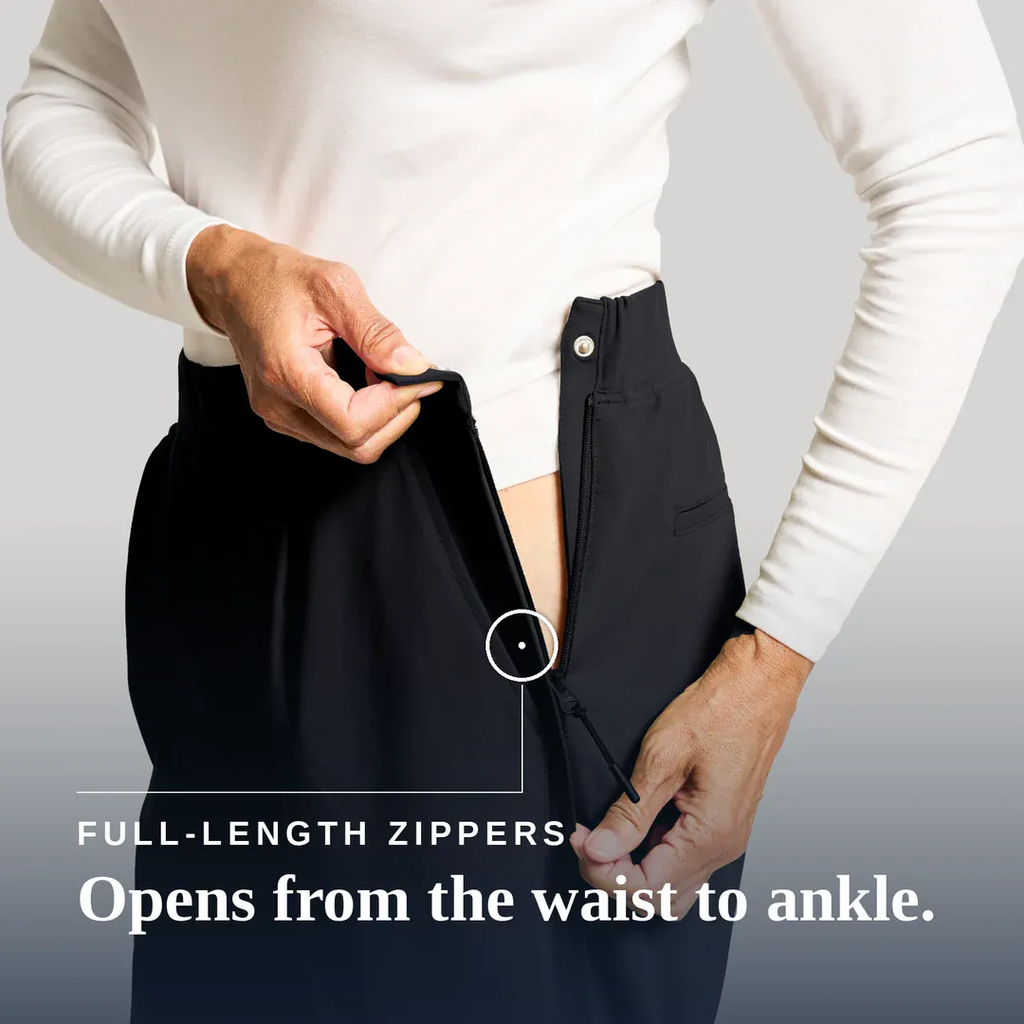
Zipper pants approach dressing differently. Side openings allow the garment to open more widely, which can reduce the amount of bending, pulling, twisting, and balancing required to get dressed.
Instead of requiring the body to adapt to the clothing, the clothing can be opened and positioned more easily around the body.
This may be particularly helpful for someone who finds it difficult to lift a leg, bend at the hip, maintain balance while dressing, or pull tight fabric into place.
Zipper Pants vs Traditional Pants for Sitting Comfort
Comfort is not determined only by how a pair of pants feels when you first put it on.
Clothing that feels comfortable while standing may feel quite different after several hours of sitting. Waistbands can begin to feel tighter, fabric may bunch around the hips or knees, and restricted movement can make small pressure points more noticeable.
This can become particularly relevant during long journeys, extended office hours, wheelchair use, or periods of recovery when a person spends more time sitting than usual.
Many adaptive pants combine accessible openings with stretch fabrics and flexible waistbands. These features may help the garment accommodate changes in body position more easily.
The difference between traditional and adaptive pants may therefore become more noticeable after several hours of wear rather than during the first few minutes.
How Zipper Pants Can Help Caregivers
Adaptive clothing can also make a difference to people who regularly assist someone else with dressing.
Helping another person put on traditional pants may involve lifting or repositioning the legs, pulling fabric carefully over the hips, adjusting the waistband, and avoiding movements that cause pain or discomfort.
If the person being dressed has limited mobility, stiffness, weakness, or difficulty standing, the process can become physically demanding for both individuals.
A wider opening can make the garment easier to position while the person is sitting or receiving assistance. This may reduce some of the pulling, lifting, and repositioning involved in changing clothes.
For caregivers who provide dressing assistance every day, even small improvements to the process can make the routine more manageable.
Why Zipper Pants Can Be Useful During Recovery
Not everyone who wears adaptive clothing has a permanent mobility limitation.
Many people first consider zipper pants because an injury, operation, brace, swelling, or temporary reduction in movement makes ordinary clothing difficult to manage.
After surgery, for example, movements that previously felt effortless may temporarily become uncomfortable. Bending, twisting, or pulling clothing over a sensitive area can make getting dressed more complicated than expected.
The same problem can occur when wearing a medical boot, knee brace, compression garment, or other equipment that makes narrow pant legs inconvenient.
Pants that open along the side can provide additional space and may make dressing easier during this period.
Once mobility improves, some people return to traditional clothing. Others may continue using adaptive pants simply because they prefer the convenience.
Zipper Pants Are Not Only for Older Adults
Adaptive clothing is often associated with seniors, but age is only one reason someone may benefit from easier-to-manage clothing.
Zipper pants may be useful for people experiencing:
- Temporary mobility restrictions following an injury
- Recovery after surgery
- Difficulty bending or lifting the legs
- Joint stiffness
- Reduced balance
- Swelling in the legs or feet
- The need to wear a brace or medical boot
- Wheelchair use
- Fatigue that makes dressing more demanding
- A need for caregiver assistance
The important factor is not age itself. It is whether conventional clothing creates unnecessary difficulty during dressing or throughout the day.
Modern Zipper Pants Do Not Have to Look Clinical
One reason some people hesitate to consider adaptive clothing is the assumption that it will look obviously medical.
Historically, accessible garments were often designed primarily around function. Appearance and personal style were sometimes secondary considerations.
That has changed considerably.
Many modern zipper pants are designed to resemble ordinary trousers or casual pants, with adaptive features incorporated discreetly into the garment. Side zippers can be positioned along existing seams, while stretch fabrics and flexible waistbands can be integrated without dramatically changing the appearance of the clothing.
This distinction matters because practical clothing should not necessarily require someone to give up their usual style.
A person may still want to dress appropriately for work, meet friends, go to a restaurant, travel, or attend an event while benefiting from clothing that is easier to manage.
Good adaptive design can provide additional functionality without making the wearer feel as though they are dressed in medical clothing.
Independence in Dressing Can Matter More Than It Seems
Getting dressed is such an ordinary activity that its importance is easy to underestimate.
When someone can dress independently, clothing is simply part of the morning routine. When dressing becomes difficult, however, the task can take considerably longer and may require assistance.
This can affect more than convenience. The ability to manage everyday activities independently is often closely connected with confidence, privacy, and a sense of control over daily routines.
Adaptive clothing cannot remove the underlying causes of reduced mobility, but thoughtful garment design may reduce some of the unnecessary physical demands involved in dressing.
Something as simple as changing where a garment opens can therefore have a meaningful practical effect.
Zipper Pants vs Traditional Pants: Which Are More Comfortable?
There is no single answer because comfort depends on the individual.
Traditional pants remain perfectly suitable for many people. If bending, standing, balancing, and pulling clothing on or off are easy, the advantages of side zippers may not seem particularly significant.
The difference becomes more noticeable when those movements require additional effort.
For someone experiencing pain, stiffness, limited mobility, fatigue, recovery from an injury, or difficulty dressing independently, zipper pants may remove several of the small physical challenges that occur during an ordinary day.
They may also be easier to adjust around braces, swollen areas, or other temporary changes to the body.
Ultimately, the most comfortable option is the one that fits both the person’s body and the way they move throughout the day.
Who May Benefit Most From Zipper Pants?
Zipper pants can potentially be useful for several different groups.
Older adults with reduced mobility may appreciate having clothing that requires less bending and balancing. People recovering from an operation or injury may benefit from wider openings that are easier to manage around tender areas or medical equipment.
Wheelchair users may also find that adaptive designs make seated dressing and clothing adjustments easier. Likewise, people who receive help from a family member or professional caregiver may benefit from garments that require less repositioning during dressing.
The same principles can apply to people with temporary mobility restrictions.
Someone does not need to consider themselves disabled or dependent to find adaptive clothing useful. Sometimes the practical benefit is simply that getting dressed requires less effort.
Small Clothing Changes Can Make Daily Routines Easier
Adaptive clothing illustrates how relatively small design decisions can influence everyday comfort.
A zipper placed along the side of a pair of pants may seem like a minor modification, but it changes how widely the garment can open and how it can be positioned around the body.
For someone with full mobility, the difference may be minimal. For someone who struggles with bending, balancing, pulling, or repositioning clothing, it can be much more noticeable.
This is one reason adaptive fashion is increasingly moving away from the idea that accessible clothing should be limited to highly specialized or clinical garments.
The goal is increasingly simple: make everyday clothing work for a wider range of bodies and abilities.
Conclusion
The difference between traditional pants and zipper pants is less about the zipper itself and more about what that zipper changes.
It can allow the pants to open more widely, reduce the amount of bending and repositioning required during dressing, provide easier access for assisted dressing, and make clothing adjustments more manageable throughout the day.
Traditional pants remain perfectly appropriate for people who can put them on and wear them comfortably. Zipper pants simply provide another option when ordinary clothing starts requiring more physical effort than it should.
For people dealing with stiffness, recovery, fatigue, reduced mobility, or caregiver-assisted dressing, those small improvements in clothing design may make everyday routines noticeably easier.
Good adaptive clothing does not have to look dramatically different from ordinary clothing. Ideally, it simply makes getting dressed require a little less effort.
